The barbarism of the Iranian regime is plain — the West must not look away
After relatively little in the news about the massacre of civilians inside Iran this month, the world is finally beginning to catch up on the horrors unfolding. Protests against the economic situation quickly turned to calls to bring down the government and grew to 186 towns and cities across Iran. In a television address on January 9, an order came from the Supreme Leader Ali Khamenei to security forces to suppress the protests “by any means necessary… shoot to kill and show no mercy”.
So-called “police” are murdering their own unarmed citizens in the tens of thousands, firing machine guns into the crowds
The internet was shut down and deaths on the streets quickly surged, with little video getting out. It is difficult to believe that so-called “police forces” are murdering their own unarmed citizens in the tens of thousands, firing machine guns into the crowds, shooting some protesters in the head at point-blank range with military grade weapons. And yet the overwhelming evidence now points to it having happened — and still happening now.
The numbers may vary, but by any standards this is the worst mass murder of civilians in contemporary Iranian history. Based on the verification of images, reports and analysis by the International Centre for Human Rights, to date approximately 43,000 people have been killed, 350,000 injured and 20,000 arrested. With the internet having been blacked out for more than two weeks, no doubt the numbers will rise dramatically as the scale of death and destruction is revealed.
When the Islamic regime partially restored the internet this week, hundreds of videos poured through on Telegram. I make it my business to watch them, as they are a testimony to what Iranians inside the country are experiencing. The videos vary — some simply show the protests with crowds chanting in unity. Others are trauma-inducing. The brutality of the Islamic Revolutionary Guard Corps is evident. One video that has gone viral shows a young woman lying injured on the ground struggling to stay alive, being prodded and then shot twice in the head.
Bodies dumped like garbage
The death toll is increasing at such an alarming rate it is beyond shocking. Bodies are piled up in makeshift morgues, warehouses and sports stadiums in black bags, dumped like garbage. Iran “has become a cemetery in which the hopes of our youth are buried,” were the words of international lawyer Payam Akhavan at the UN recently. Equally staggering were the silence and inaction from the international community.
This week marked International Holocaust Day, a reminder to carry the promise of “never again”. What we are witnessing in Iran in real time is a government trying to exterminate the part of its own population that does not agree with it. Even if it that’s the majority, there seems to be no stopping it.
The question is, why? According to Khamenei: “Killing is a bad thing. It is not desirable. But sedition is worse.” So what is sedition? Disobedience to the regime. It means people protesting and not complying. And this is how the system justifies itself: if they can frame dissent as a moral disease and being “against God”, then violence becomes the treatment. It also invokes Islam. Most Muslims will tell you that the verses in the Koran about sedition are historical and contextual, tied to war. And most Muslims will tell you those are not blanket permissions to kill protesters. But apparently true “Islamists” strip away the context and seek to make killing protesters sound righteous. The twisted thinking is they are doing God’s will.
A deep hypocrisy
It’s a very strange model of governance. Especially when the Islamic Republic of Iran’s foreign ministry spokesperson condemned how ICE agents handled protests in America. Esmaeil Baghaei claimed “law enforcement in Minnesota are in violation of human rights”.
One could argue that he revealed more than he intended by showing a clear understanding of the language of human rights. The loss of life caused by police misconduct or abuse in the United States or any country is serious and deserves scrutiny and accountability. But this stands in sharp contrast to the reality in Iran, where the state has killed tens of thousands of its own unarmed citizens as part of a campaign of repression. When a government responsible for such systematic violence points to individual cases abroad to claim moral authority, the gap in scale, intent, and responsibility exposes a deep and laughable hypocrisy.
The determination of the people to stand up for each others’ rights is as inspiring as it is unequivocal. But their message has a wider significance. The regime is the largest state sponsor of international terrorism. If they can do this to their own people, what are they capable of internationally?
The people of Iran have reached the stage where they would rather die on their feet than live on their knees. I see videos of young men facing guns with no fear, fighting back with their bare hands. The courage that we see now after years of suppression is encapsulated in a single banner that was raised across a bridge in Tehran which states simply: “We no longer fear you — we fight.” And after all the brutality, what gives people in Iran hope is the world not looking away. Because in the brief moments the internet connects, to glimpse messages of support online makes them feel less alone.
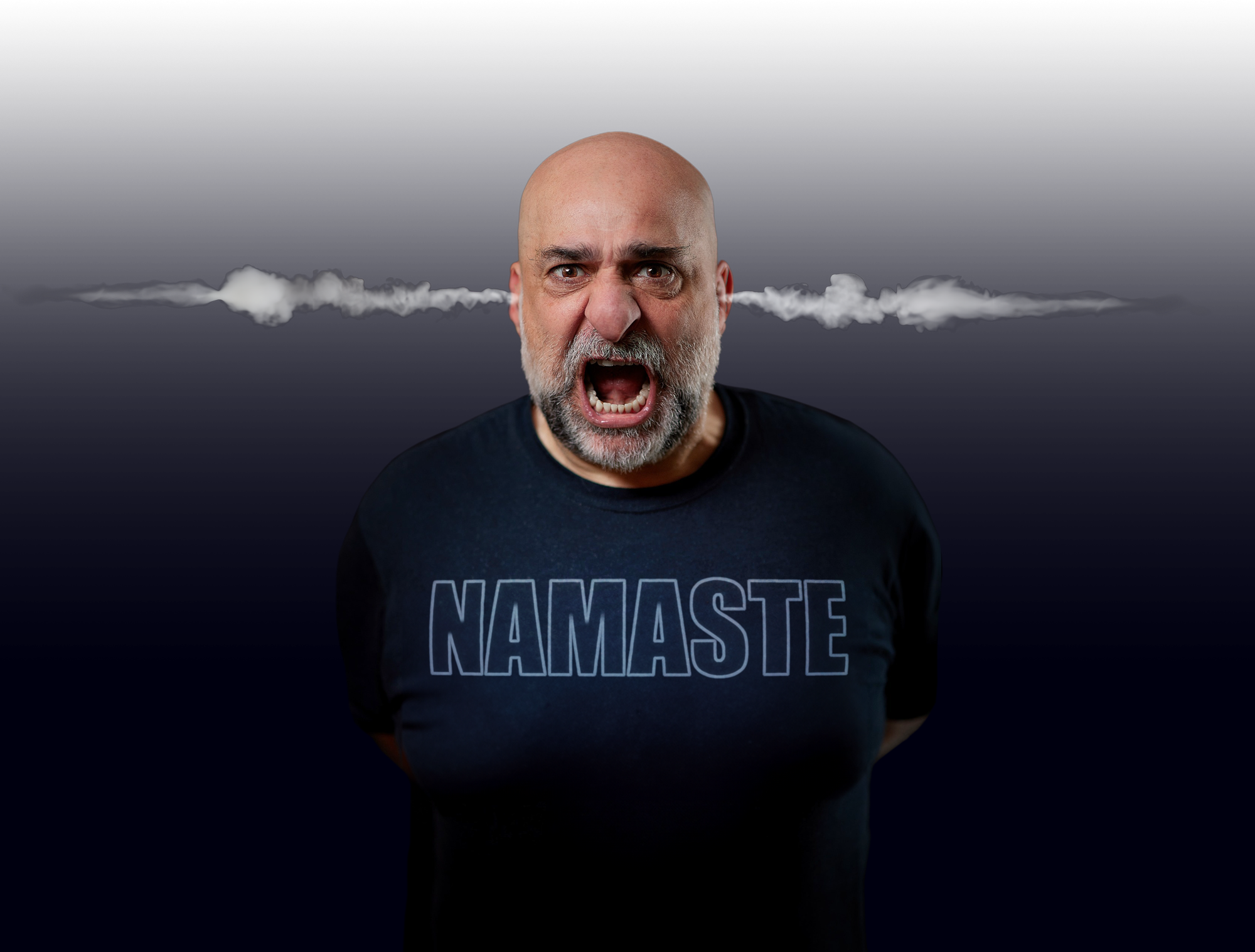
The Persian Comedy Powerhouse performs his critically acclaimed new show NAMASTE where Omid peacefully bows to his inner anger and unleashes a torrent of comedic vitriol upon the current state of this dangerously messed up planet. No government gets a green card. No tyrant avoids a take down. No audience member leaves the theatre with an ounce of laughter left in them...You have been warned.
| JULY 2026 | ||
|---|---|---|
| 24 JULY | MALTA, INTERCONTINENTAL ARENA | SOLD OUT |
| 25 JULY | MALTA, INTERCONTINENTAL ARENA | SOLD OUT |
| |||||||||| |||||||||| |||||||||| | |||||||||| |||||||||| |||||||||| |||||||||| |||||||||| |||||||||| |||||||||| |||||||||| |||||||||| |||||||||| |||||||||| |||||||||| |||||||||| |||||||||| | |||||||||| |||||||||| |||||||||| |
ALL APRIL SHOWS MOVED TO THE FOLLOWING DATES
| OCTOBER 2026 | ||
|---|---|---|
| 29 OCT | ILKLEY, KING'S HALL | SOLD OUT |
| |||||||||| |||||||||| |||||||||| | |||||||||| |||||||||| |||||||||| |||||||||| |||||||||| |||||||||| |||||||||| |||||||||| |||||||||| |||||||||| |||||||||| |||||||||| |||||||||| |||||||||| | |||||||||| |||||||||| |||||||||| |
| NOVEMBER 2026 | ||
|---|---|---|
| 10 NOV | CREWE, LYCEUM | BUY TICKETS |
| 11 NOV | SALFORD, THE LOWRY | SOLD OUT |
| 13 NOV | WORTHING, ASSEMBLEY HALL | SOLD OUT |
| 14 NOV | LEAMINGTON SPA, ROYAL SPA CENTRE | BUY TICKETS |
| |||||||||| |||||||||| |||||||||| | |||||||||| |||||||||| |||||||||| |||||||||| |||||||||| |||||||||| |||||||||| |||||||||| |||||||||| |||||||||| |||||||||| |||||||||| |||||||||| |||||||||| | |||||||||| |||||||||| |||||||||| |
| JANUARY 2027 | ||
|---|---|---|
| 19 JAN | CHESTER, STORY HOUSE | BUY TICKETS |
| 20 JAN | DARLINGTON, HIPPODROME | BUY TICKETS |
| |||||||||| |||||||||| |||||||||| | |||||||||| |||||||||| |||||||||| |||||||||| |||||||||| |||||||||| |||||||||| |||||||||| |||||||||| |||||||||| |||||||||| |||||||||| |||||||||| |||||||||| | |||||||||| |||||||||| |||||||||| |
| FEBRUARY 2027 | ||
|---|---|---|
| 11 FEB | LONDON PALLADIUM | BUY TICKETS |
| |||||||||| |||||||||| |||||||||| | |||||||||| |||||||||| |||||||||| |||||||||| |||||||||| |||||||||| |||||||||| |||||||||| |||||||||| |||||||||| |||||||||| |||||||||| |||||||||| |||||||||| | |||||||||| |||||||||| |||||||||| |
Omid writes article for the Telegraph.
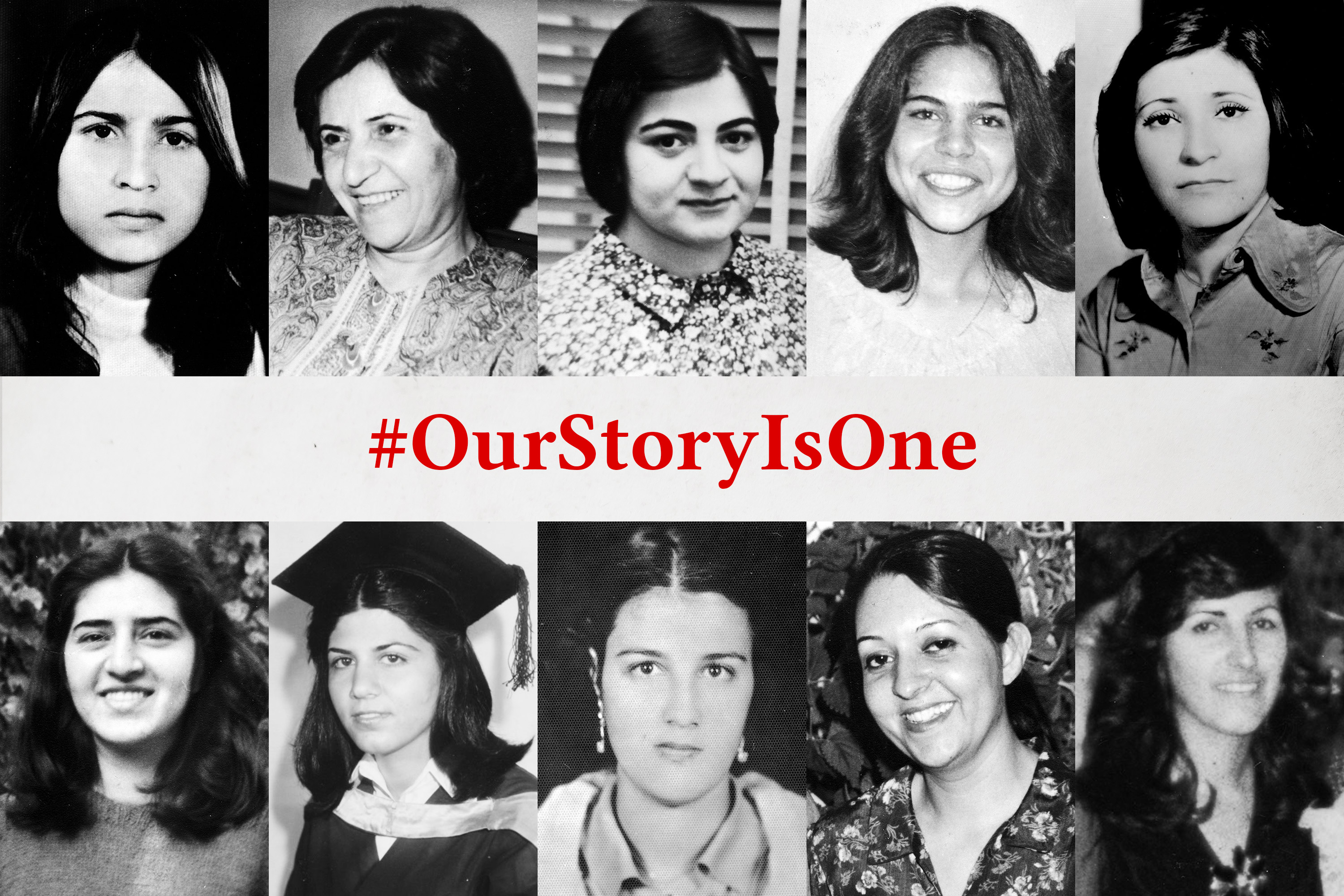
The Iranian State’s Burial of Bahá’í women must not be forgotten.
The struggle for women’s rights in Iran is older than many may think. I am proud to stand with them.
IN THE 44 YEAR HISTORY of Iran’s “Islamic” Republic, one of the most heinous acts it has ever committed – from a preposterously large number to choose from – took place in the late hours of the 18th of June, 1983, when 10 Bahá’í women in Shiraz were hanged on the charge of refusing to renounce their religious beliefs.
One after the other, the women were forced to watch each other hang, supposedly to give a final opportunity to recant their faith and save their own lives. Each of them refused. The oldest was Ezzat, 57, hanged with her daughter aged 23, her husband executed two days earlier. Nosrat was 46, her son executed two days before. Most of the rest were in their 20s.The youngest, Mona, whose father had been executed three months before, was 17. She asked to go last so the others would not see her hang. When I initially heard the news. living my normal London life in leafy Kensington, the impact was strangely minimal.
I was also 17, born 20 days after Mona, but it was part of a stream of stories coming out of Iran of mass killings and executions. I was in a constant state of anxiety as a great many killed were friends and acquaintances of my parents.
Notable amongst these were the killing of the Bahá’í administrative body of the National Assembly members in 1980 and the Tehran Assembly, unceremoniously shot in 1981, all of them known to us.
By June 1983, without the internet being in existence then to give us any details to bring the story a little closer, the hanging of the 10 women of Shiraz seemed to get lost in the maelstrom. Iran was constantly on the TV news and my main concern was the social impact it had on me.
My school friends were aware but didn’t fully grasp what I was going through due to my lack of confidence in being able to explain to them an important nuance: that I was part of a persecuted minority, that I was going through the double pain of association with a country full of violent fundamentalists that brought me deep social shame, but who were also murdering members of my own community.
It was two years later when Mona’s story was captured in the pop song “Mona With The Children” that I began to connect. I attended a gathering at the Bahá’í centre in London with Jack Lenz & Doug Cameron, the song’s writer/producer and singer. We got to know Mona as an exceptional young girl, definitely not a religious zealot. She was just a young girl trying to build capacities within children. Her personality connected with me.
We watched the video. The impact of the music with the images was overwhelming. And impressive to see Alex Rocco playing a Mullah. A far cry from playing casino owner Moe Greene in The Godfather, famously shot in the eye while on a massage table. What was important was that they had created art to keep their memory alive. Even more so now.
Iranian women’s struggle for equality is older than many in the West may think. The 19th Century figure, Táhirih, a poet and scholar, exemplified the power of women to transform society. She was an early adherent to the Bábí movement, a precursor of the Bahá’í faith, and empowered by the teachings of her newly found Faith, she rose up to announce a break with the past. She notably caused profound shock when she removed her veil publicly at a conference attended only by men in 1848.
In 1852 she was put to death by the Iranian authorities. These words have been attributed to her just before being executed: “You can kill me as soon as you like, but you cannot stop the emancipation of women”.
Today, in the blood, tears, and wounds of thousands of young women in Iran seeking equality, we can see echoes of the injustice suffered by the 10 women of Shiraz 40 years ago. The same forces are still at work today deploying torture, mutilation and murder to deny Iranian women fundamental rights.
Many died within days of the best known victim of the wave of femicides in Iran, Mahsa Amini, beaten by morality police for not wearing her hijab correctly, dying in hospital on September 16 last year. Then it was Nika Shahkarami 16, Sarina Esmailizadeh 16, killed during protests. So many of the dead are young girls. Hadis Najafi 22, Mahsa Mogoi, 18. The list goes on.
The men of Iran also stand in solidarity with their mothers, sisters, wives and daughters and risk their lives. Many men have already been executed just for protesting. I am in awe of their courage. But we are all deeply connected. I am proud to participate in the #OurStoryIsOne project to keep the memory of the 10 Women of Shiraz alive and inspire real change not only in Iran, but for the whole world.
Omid Djalili,
2 July 2023.
Link to the article published in the Telegraph here.
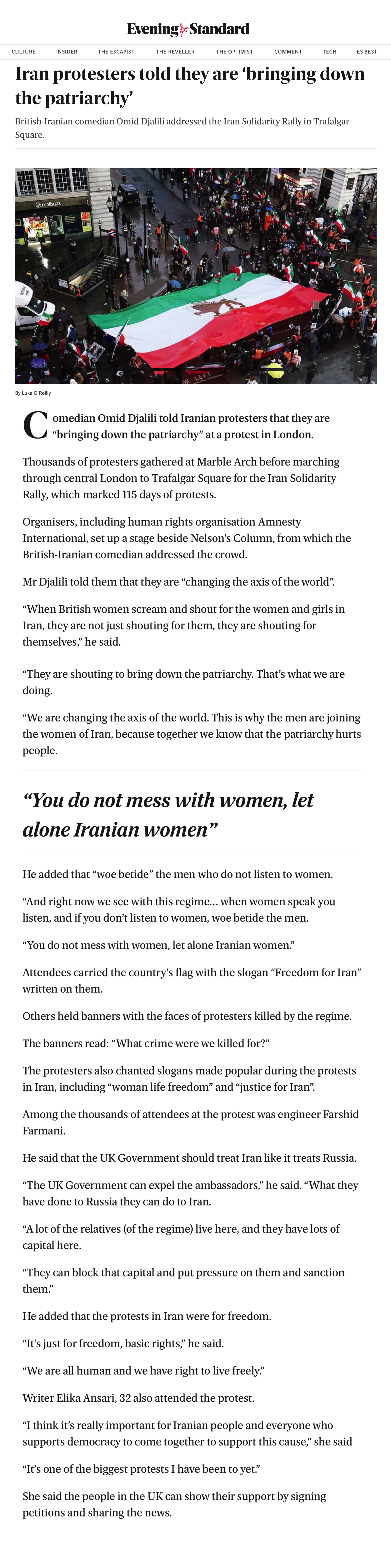
Omid addresses Iran Solidarity Rally in Trafalgar Square
Right now, the Iranian Djalili is probably one of the most subversive, let alone funniest, comedians around...
To carve yourself out a career as the thinking person's Iranian comedian in this political climate takes a fine brain and a masterful way with the audience. There is no question that Omid Djalili possesses both...

SOCIAL MEDIA
YOUTUBE

CONTACT
Please contact the appropriate agency for your requests.
ACTING/BRANDING:
Alex Segal
alex@intertalentgroup.com
ALEX SEGAL:
Director & Agent
InterTalent Rights Group
InterTalent House, 46 Charlotte Street, London, W1T 2GS
+ 44 (0)20 7427 5681 | alex@intertalentgroup.com | www.intertalentgroup.com
STANDUP COMEDY:
Nigel Klarfield
BOUND AND GAGGED COMEDY
+44 (0) 20 8450 3110
nigel@boundandgaggedcomedy.com
WEB:
DESI9NERS

DISCLAIMER
This disclaimer shall govern your use of this website. By using this website, you accept this disclaimer in full; accordingly, if you disagree with this disclaimer or any part of this disclaimer, you must not use this website.
Link to the disclaimer is here.
This website © OMID DJALILI 2026
OMID DJALILI uses cookies on official OMID DJALILI websites (the "Service"). By using the Service, you consent to the use of cookies.
Our Cookies Policy explains what cookies are, how we use cookies, how third-parties we may partner with may use cookies on the Service, your choices regarding cookies and further information about cookies. The cookie policy is found on the disclaimer link above. (last updated 07/09/2022)